Reconditioning.
When Progress Stops, We Help You Move Forward.
You've finished physical therapy. You've been cleared. But you still don't move, train, or trust your body the way you used to.
Reconditioning bridges the gap between healing and performing by rebuilding the strength, control, and confidence your sport demands.
Assess. Don't Guess.You want more than a clearance.
You want to know your athlete is ready, not just released. We create a clear, individualized path back to sport, with measurable progress and communication along the way.
- Is my athlete ready for the demands of their sport?
- What still needs to be rebuilt before they return?
- How will we know they are progressing safely?
The Missing Step.
When Traditional Physical Therapy Isn't Enough
Being cleared to play isn't the same as being prepared to perform.
Many individuals finish physical therapy, get medical clearance, and are told they're ready to resume activity. However, they often no longer feel like themselves. They move differently, lack confidence, and compensate unconsciously. Even though healing has taken place, their performance hasn't fully recovered. Our reconditioning program targets those who have reached a plateau after traditional rehab and aims to return to their passions more quickly, with greater confidence and efficiency.
The Bridge Between
Rehab And Performance.
Reconditioning sits in the gap between physical therapy and full return to sport. It is where an athlete rebuilds the qualities — strength, mobility, stability, conditioning, coordination, and confidence — needed to safely handle the demands of training and competition again.
Most athletes who rush back to training end up back in the same place they started. Most athletes who sit out too long lose the capacity they worked so hard to build.
Our approach is grounded, methodical, and individualized. We rebuild from the foundation up, address the underlying causes of breakdowns, and progress athletes back to full performance with confidence.
Returning Isn't Just Physical.
After an injury, many athletes don't just lose strength.
They lose confidence.
- They hesitate.
- They second-guess.
- They avoid movements they once performed without thinking.
Our goal is to rebuild both the body and the confidence to trust it again.
Assess.
Don't Guess.
Every reconditioning plan follows a clear four-step progression: Assess, Reorganize, Rebuild, and Return. A thorough evaluation of movement quality, posture, balance, reflexes, and the underlying factors driving the breakdown gives us the foundation we need before loading back up.
- Movement quality, posture, and balance
- Joint-by-joint mobility and stability
- Active range of motion and asymmetries
- Reflexes, sensory organization, and motor control
- Strength capacity and tissue tolerance
- Aerobic and energy-system conditioning
- Sport-specific demands and goals
- Injury history and current limitations
We don't guess — we assess, then progress you through a plan built around your body and your sport.
Sprint
Profiling.
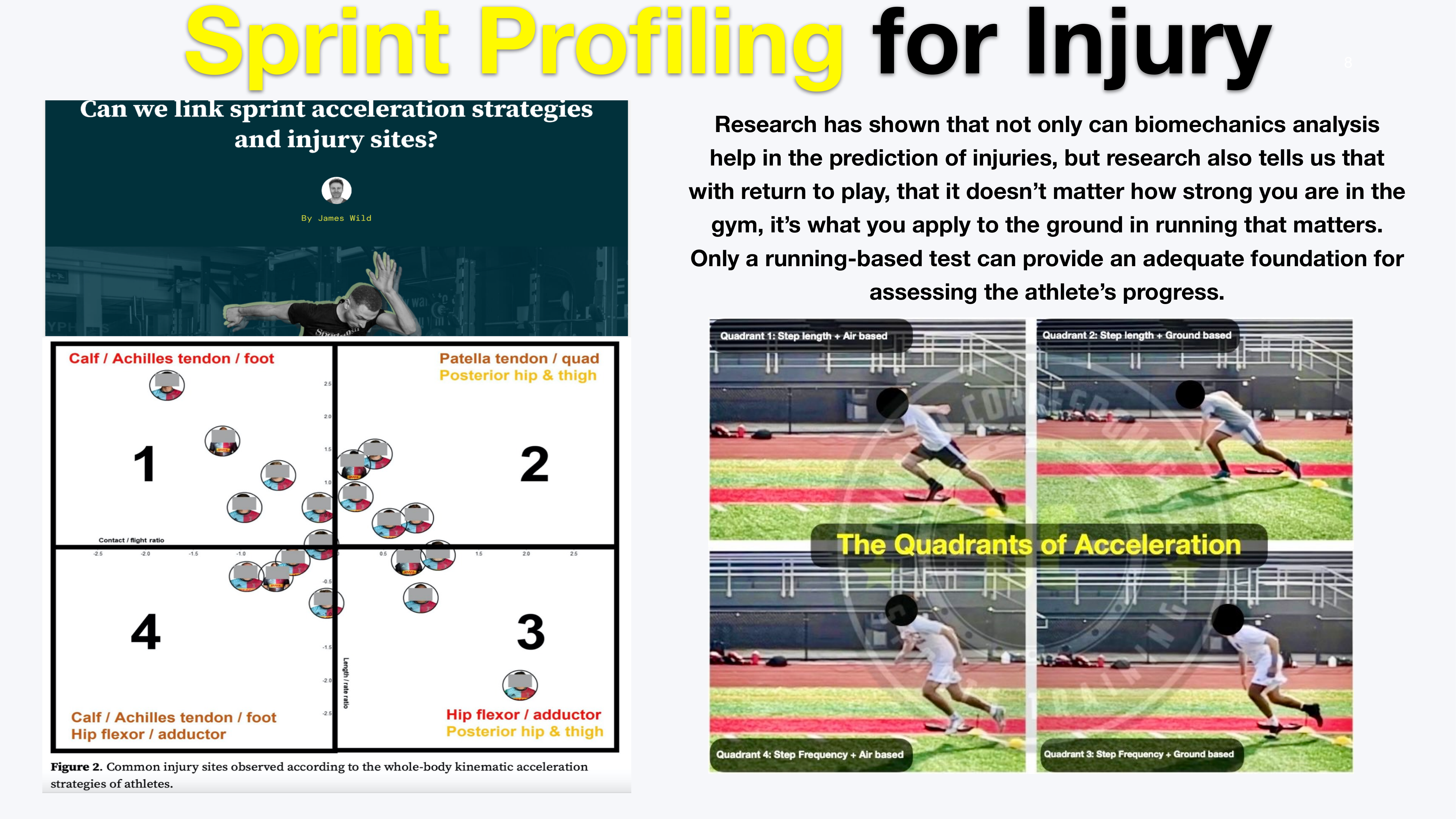
Sprint profiling is essential for health and performance. New and previous injuries, changes in physical strength, and body size all affect an athlete's mechanics — and only specific movement-based tests can provide a solid foundation for assessing an athlete's progress.
This approach narrows the focus and identifies red flags. Developing a profiling strategy can effectively monitor changes in movement and technique in response to training and coaching interventions, as well as during return-to-play.
Research indicates that biomechanical analysis can predict injuries and shows that, when returning to play, an athlete's gym strength is less important than how they apply force to the ground during running. A running-specific test is essential for accurately evaluating an athlete's progress.
Reconditioning
In Action.
See how reflex-based work and structured reconditioning help athletes move out of protective patterns and back into full performance.
From The
Training Floor.
Short clips from real sessions — what the work actually looks like when an athlete is moving out of compensation and back into full capacity.
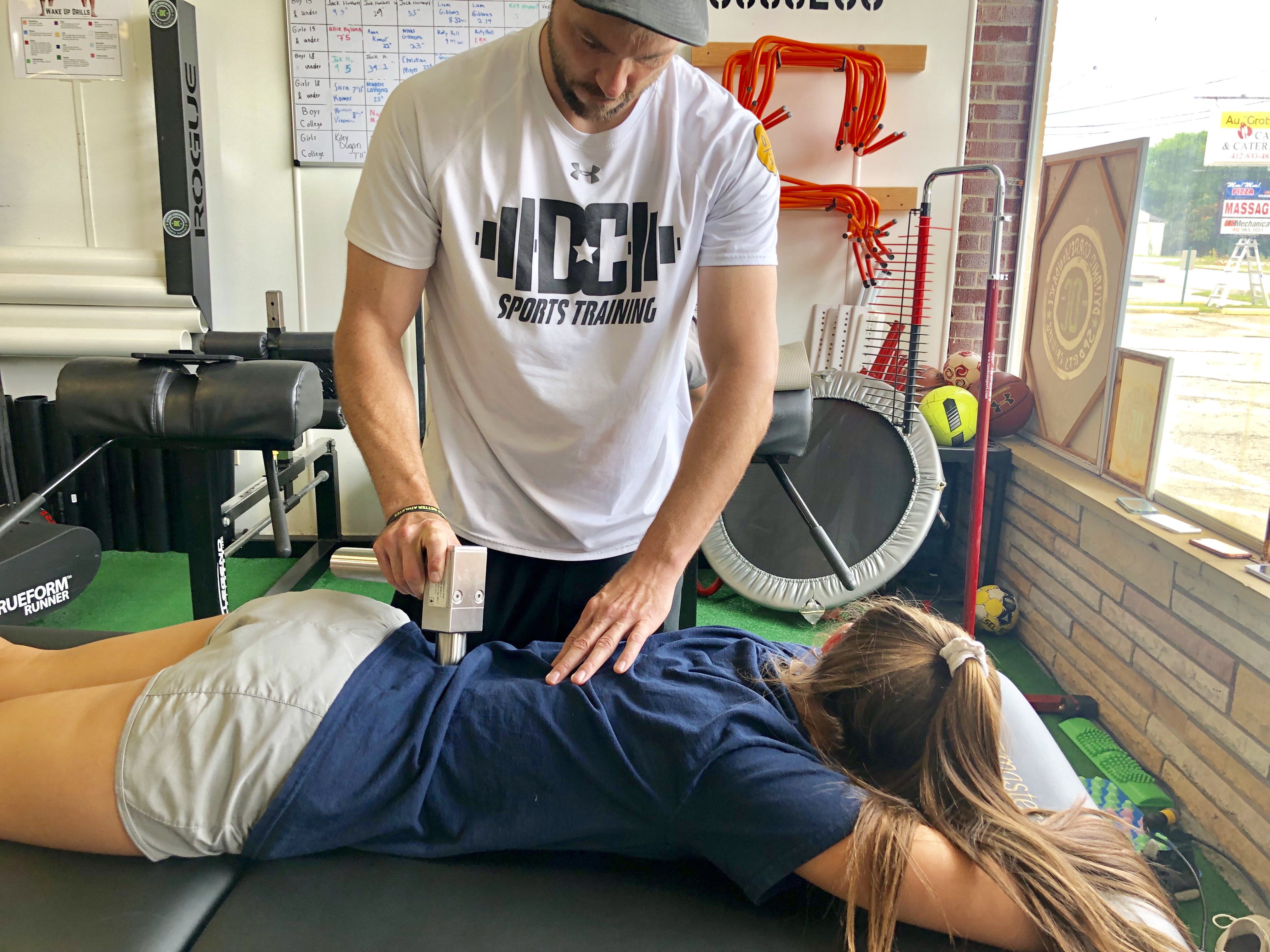
Using neurology to help decrease pain and improve range of motion within minutes.
Rebuilding strength, control, and confidence through the progression.
Primal Reflex Release
Technique (PRRT).
We don't just treat muscles and joints — we evaluate how the brain, reflexes, sensory systems, and movement patterns interact to create the way a person moves. By improving neurological organization and reducing compensation, we help the body build more efficient and resilient movement.
Pain, tightness, and poor movement are not always just "muscle problems."
According to neurophysiologist Charles Scott Sherrington, movement is built on reflexes, sensory input, and nervous system organization.
PRRT (Primal Reflex Release Technique) is a reflex-based approach that aims to calm overactive protective reflexes that may be contributing to chronic tightness, poor posture, stiff movement, coordination issues, and pain & guarding.
Instead of forcing muscles to relax, PRRT works by changing the sensory information going into the nervous system — helping the body shift out of protective patterns.
"Movement is inseparable from the reflexive organization of the nervous system."
— Charles Sherrington
How It Works
PRRT doesn't force muscles to relax. It changes the sensory information feeding the nervous system — helping the body shift out of protective patterns and into efficient movement.
What It May Help With
- Chronic tightness
- Poor posture
- Stiff movement
- Coordination issues
- Pain & guarding
The nervous system organizes movement around safety first.
Sometimes the body isn't "tight"… it's protective.
What You Can
Expect.
- Pain-free movement restored.
- Joint stability, control, and tissue resilience.
- Movement confidence rebuilt from the ground up.
- Strength and aerobic capacity back on track.
- Coordination, balance, and sport-readiness.
- Long-term durability — not just a quick return.
A more resilient, capable athlete — ready for the demands of sport, training, and the long run.
Built For Athletes
Coming Back.
Whether you're returning from injury, rebuilding after a long layoff, or finally addressing a recurring issue — this program is built for the work it takes to get back to full performance.
Returning from injury
Athletes coming back from surgery, sprains, strains, or other injuries who need a structured, safe path back to sport.
Coming off a long layoff
Athletes returning after an extended break from training who need to rebuild capacity from the ground up.
Dealing with recurring issues
Athletes stuck in a cycle of the same injuries or compensations who want to finally address the root cause.
Post-rehab finishing work
Athletes cleared by a physical therapist but not yet ready for full training — bridging the gap between rehab and performance.
Older athletes staying in the game
Athletes who want to extend their career, manage wear and tear, and stay resilient through the demands of their sport.
Anyone rebuilding confidence in movement
Athletes who feel hesitant, guarded, or unsure of their body after an injury or extended time off.
An athlete who doesn't just return to sport—
- They return prepared.
- More confident.
- More resilient.
- Better organized.
Ready for the demands of competition.
Ready To Come Back
Stronger Than Before?
Reach out to learn more about the program and how we can build a plan to get you back to full performance the right way.